When Eyelids Cause Eye Pain: Understanding Entropion and Ectropion in Pets
It is easy to assume a dog who squints constantly or always has gunky eyes is experiencing minor allergies or a breed quirk. Some dogs just do that, right? Sometimes, yes. But when squinting or tearing is caused by eyelid anatomy that puts the lid or lashes in direct contact with the eye surface, it is not a quirk: it is a source of ongoing discomfort that often goes unrecognized simply because dogs are so good at not complaining. Entropion and ectropion are both correctable with surgery, and the outcomes are generally excellent when the procedure is timed well and performed with precision.
Parker Center Animal Clinic in Parker, CO is an AAHA-accredited, Certified Cat-Friendly practice that has been providing comprehensive care since 1995, with modern laser surgery services that include the advanced capabilities needed for eyelid correction procedures. We give honest assessments of whether surgery is the right next step and what recovery actually looks like. Call 303-841-8833 or book an appointment online to have your dog’s or cat’s eyelids properly evaluated.
What Are Entropion and Ectropion?
These are two distinct structural eyelid problems, and understanding the difference helps explain why each one causes the specific symptoms it does.
Entropion occurs when the eyelid rolls inward, so the fur and lashes along the lid margin make contact with the cornea (the clear front surface of the eye) with every single blink. Imagine having an eyelash perpetually rubbing your eye and being unable to remove it. That friction causes pain, excessive tearing, redness, and over time, corneal ulceration and scarring.
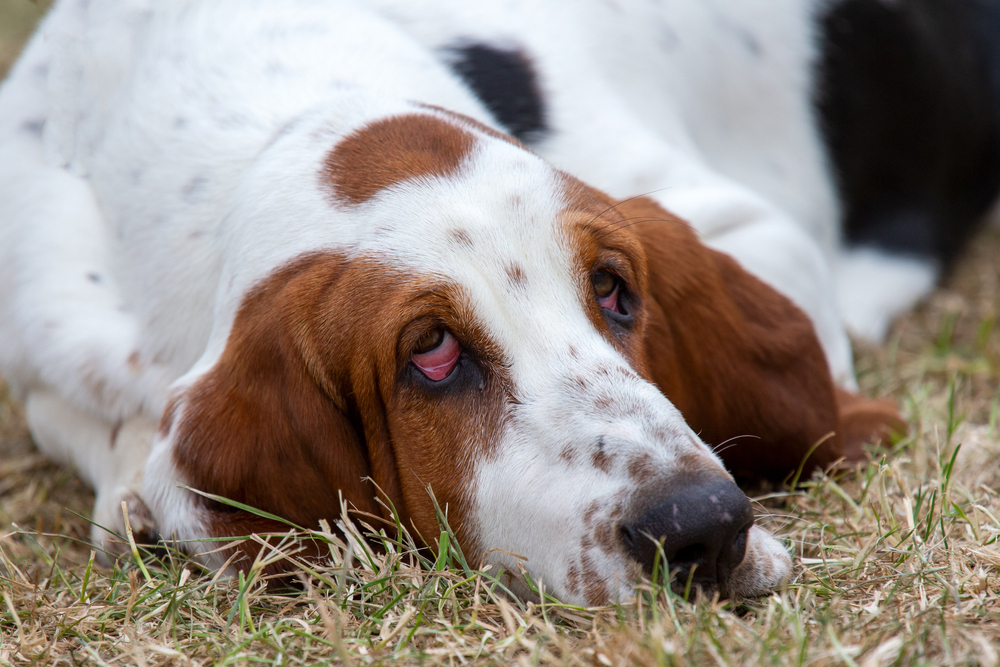
Ectropion is the opposite: the lower eyelid sags outward, exposing the inner lid tissue (the conjunctiva) to air, dust, and bacteria. The drooping creates a pocket that collects debris and stays chronically moist, leading to repeated infections and a constantly weeping eye.
Some pets have both conditions simultaneously, sometimes called “diamond eye,” where the inner corners roll in while the outer corners roll out. Accurate diagnosis requires evaluating for other common eye conditions, eyelid position, tear production, and the health of the cornea together, since multiple problems frequently overlap.
Our diagnostics and imaging capabilities, including tonometry for eye pressure and thorough ocular examination, allow us to build a complete picture of what’s happening before recommending a treatment path.
Which Breeds Are Most at Risk?
Genetics, Structure, and Age
Eyelid disorders are strongly influenced by facial anatomy, which is why breed predisposition is such a significant factor. Hereditary eyelid conditions run in specific lines and are worth knowing about before bringing a predisposed breed home.
Breeds prone to entropion:
- Shar Peis and Chow Chows (excessive facial skin)
- Rottweilers, Great Danes, Saint Bernards, and Mastiffs (deep-set eyes, heavy faces)
- English Bulldogs and other brachycephalic breeds
- Brachycephalic dogs like Pugs or Bulldogs
- Among cats, flat-faced breeds like Persians and Himalayans are most commonly affected
Breeds prone to ectropion:
- Bloodhounds, Basset Hounds, and Newfoundlands (naturally loose lower lids)
- Saint Bernards, Cocker Spaniels, and Great Danes
Beyond genetics, eyelid problems can develop over time due to age-related tissue loosening, chronic inflammation, or previous injuries. Pain-induced squinting can also temporarily mimic entropion, which is one reason a proper examination with a topical anesthetic, to distinguish structural issues from pain responses, is essential before any treatment decision.
Signs That the Eyes Need Attention
Dogs and cats are remarkably good at continuing to function despite eye discomfort. Recognizing signs of eye pain before they become severe is the most important thing an owner can do:
- Excessive tearing or mucus discharge that recurs even after cleaning
- Squinting or keeping one eye partially closed
- Pawing or rubbing the face on furniture or carpet
- Redness of the visible inner lid tissue
- Cloudiness or color changes on the cornea
- Visible eyelid rolling or sagging
- Crusting at the inner corner of the eye
These signs indicate something more than seasonal eye irritation. Eye pain should not be dismissed as a cosmetic concern or a breed characteristic. Contact us promptly if these signs appear, particularly if the eye looks cloudy or your pet is actively rubbing.
What Happens If Eyelid Problems Go Untreated?
The consequences of ignoring entropion or ectropion compound over time. For entropion, the constant lash-to-cornea contact causes corneal ulcers, which are painful open sores on the surface of the eye. Infected ulcers can perforate the cornea in severe cases. Even without infection, chronic friction leads to scarring and pigmentation that permanently reduces vision clarity.
Ectropion’s exposure problem creates persistent eye discharge, chronic conjunctivitis (inflammation of the inner lid tissue), and recurring infections that never fully resolve because the structural cause remains. The longer either condition continues, the more complex treatment becomes, and in some cases, secondary damage cannot be fully reversed even after successful surgery.
How Are These Conditions Diagnosed?
A thorough examination includes both what the eye looks like at rest and how it responds to numbing drops. Ocular tests used in a standard eyelid evaluation include:
- Visual inspection of lid margins, lashes, and lid position before and after applying topical anesthetic
- Tear production measurement (Schirmer tear test)
- Corneal staining to evaluate for ulceration or surface damage
- Magnified examination to check for eyelash problems like distichia (abnormal lash growth) or trichiasis (misdirected lashes) that can mimic or accompany entropion
- Tonometry to measure eye pressure and rule out concurrent glaucoma
This thorough approach ensures the full picture is understood before recommending any intervention.
What Are the Treatment Options?
Temporary Tacking for Growing Puppies
Not every case of entropion needs surgery immediately. Temporary eyelid tacking uses small sutures to hold the eyelid in a more normal position while a puppy’s face finishes developing. A Shar Pei puppy at eight weeks, for example, may have entropion that resolves partially as the face matures. Tacking protects the cornea during that window and can be repeated if needed. Once the dog has finished growing and final conformation is established, the decision about permanent correction can be made with better information.
Tacking is also used when squinting from pain (spastic entropion) is suspected: if the eye returns to normal position after the pain resolves, structural surgery may not be needed at all.
Permanent Surgical Repair
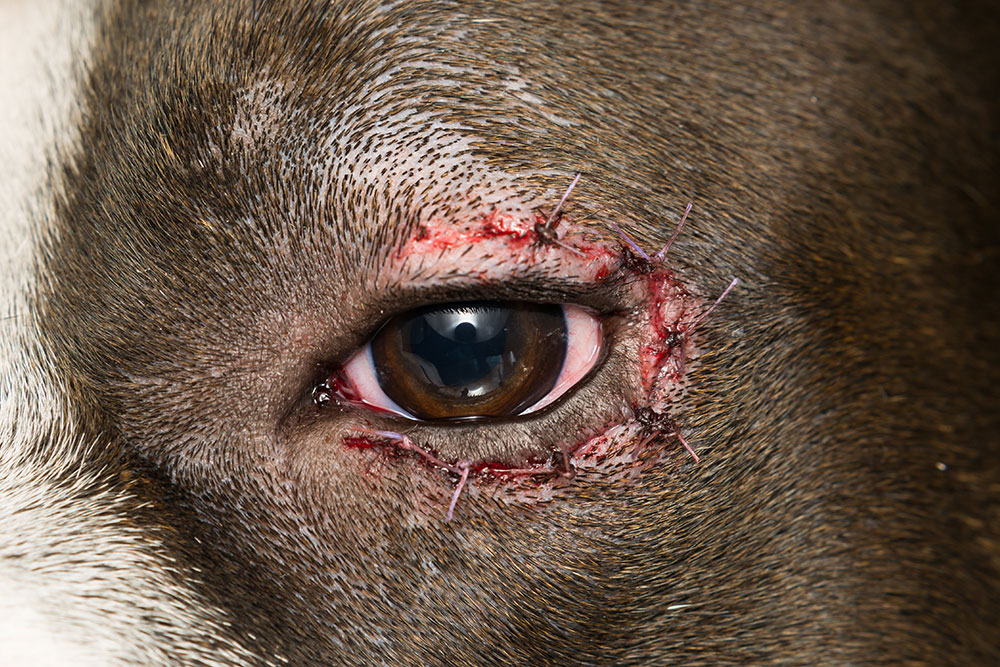
When the eyelid condition is structural and the pet is done growing, definitive eyelid surgery provides a lasting solution. The specific technique depends on the individual pet’s anatomy, the type and severity of the condition, and whether entropion and ectropion are both present. A conservative approach is preferred to avoid overcorrection, which can cause its own set of problems. Minor adjustments can be made later if needed as swelling resolves and the final lid position becomes clear.
We follow AAHA guidelines for every procedure, with pre-operative blood work, individualized anesthesia protocols, IV catheter placement for every anesthetic case, and a dedicated certified veterinary technician monitoring vitals throughout.
Entropion in Cats
Entropion in cats often presents differently than in dogs. Feline entropion may develop later in life rather than appearing at birth, and it frequently occurs alongside other surface eye disease rather than as an isolated finding. Cats may need a combination of surgical techniques tailored to their anatomy and the underlying contributors. Our Cat-Friendly certification means cat patients receive care that accounts for their species-specific stress responses and handling needs throughout evaluation and recovery. Cat owners with questions about eye concerns are always welcome to reach out to us directly.
What Happens on Surgery Day?
Knowing what to expect before, during, and after surgery takes most of the anxiety out of the process.
Before surgery, a pre-operative exam confirms your pet is healthy enough to proceed, and blood work is performed to tailor the anesthesia plan. Pain management begins before the procedure, not after, so your pet wakes up with the process already underway.
During surgery, we place an IV catheter for every anesthetic procedure, allowing fluids and medications to be administered precisely throughout. A certified veterinary technician monitors heart rate, blood pressure, oxygen, and temperature continuously from induction through recovery.
After surgery, we review all home care instructions at pickup and send every pet home with the medications they need. We’re known for thorough, clear communication, and our team is available to answer questions after your pet is home.
Book an appointment online or call 303-841-8833 to discuss what the surgical process involves for your pet’s specific situation.
Recovery and Home Care After Eyelid Surgery
The First Few Days
Mild swelling and bruising around the surgical site are expected and typically peak at 24 to 48 hours before improving. Some clear discharge is normal. Your pet may be sleepy or subdued for the first day as pain medication clears the system.
Signs that warrant a call to us:
- Rapid or worsening swelling after the first 48 hours
- Thick yellow or green discharge
- Bleeding from the incision site
- Sutures that appear loose or missing
The cone (Elizabethan collar) is non-negotiable. Pets rub their eyes instinctively when they are irritated, and a single good scratch at a fresh surgical site can undo the repair. It is one of the less popular parts of recovery, but it is genuinely critical.
For administering eye medications at home, a calm approach and consistent timing make the process much easier. We can demonstrate technique before discharge.
Healing Timeline
Sutures are typically removed at a recheck appointment 10 to 14 days after surgery. The final eyelid position continues to settle over several weeks as swelling fully resolves, so the visual result at two weeks is not always the final result. Recheck appointments confirm proper healing and allow for minor adjustments if needed.
Most pets show obvious improvement in squinting and tearing within days of surgery. The relief is often noticeable quickly, which makes the cone weeks entirely worthwhile in retrospect.
What Outcomes Can You Expect?
Eyelid surgery has a high success rate when performed by an experienced team with careful technique. Most dogs and cats experience immediate relief from pain and a significant reduction in tearing, redness, and eye discharge.
Outcomes are best when surgery is performed before secondary damage to the cornea has accumulated. Pre-existing corneal scarring or pigmentation may not fully clear even after successful correction, but pain relief and protection from further damage are consistently achieved. For show dog owners, some breed registries have policies about surgical corrections that are worth reviewing before scheduling.
Factors that influence outcomes include the severity of the malposition before surgery, your pet’s overall eye health, how well the face has finished developing, and the quality of home care during recovery, primarily cone compliance.
Our team has been providing compassionate, careful surgical care to the Parker community since 1995- and that experience and dedication goes into every procedure.
Frequently Asked Questions About Eyelid Surgery in Pets
At what age can a puppy have entropion surgery?
Permanent surgery is typically delayed until facial development is complete, usually around 12 to 18 months depending on the breed. Temporary tacking is used in the meantime to protect the cornea.
Will my dog need this surgery more than once?
Most pets need a single surgical correction. Occasionally, minor revisions are recommended after full healing to fine-tune the lid position. The conservative surgical approach is specifically designed to minimize this possibility.
Is this procedure safe for cats?
Yes, with appropriate handling and anesthesia tailored to feline physiology. Our Cat-Friendly certification reflects specific training in minimizing cat stress throughout veterinary procedures, including surgery.
How long will my pet wear the cone?
Typically until suture removal at the 10-14 day recheck, though this varies by individual healing. If the incision site looks excellent at the recheck, the cone comes off. If healing needs more time, it stays on.
Can ectropion resolve without surgery?
Mild ectropion in some older dogs is managed medically with lubricating drops and regular cleaning to reduce infection risk. Structural ectropion causing persistent infections or corneal exposure typically requires surgical correction for lasting improvement.
Protecting Your Pet’s Vision for the Long Term
Entropion and ectropion are not cosmetic concerns. They are sources of genuine discomfort that, left untreated, lead to progressive eye damage. Timely surgical correction relieves pain, prevents corneal scarring, and gives most pets a dramatically improved quality of life.
We’re ready to evaluate whether surgical correction is indicated, explain the options clearly, and provide the precise, attentive care your pet deserves. Call 303-841-8833 or book an appointment to get a proper eyelid evaluation and talk through what comes next.