New Clients Can Receive $25 off Your Pet’s First Exam!

Healthy Teeth, Healthier Pets for Life
Pet dental health is an important part of your pet’s overall health. The bacteria that builds up during dental disease can enter the blood stream and lead to heart disease, kidney disease, and other problems. By removing painful teeth, dentistry can often improve your pet’s quality of life.
Comprehensive Oral Health Assessment & Treatments
Pet dentistry at PCAC falls into two categories:
- Dental cleanings under anesthesia for routine prophylactic care
- Oral Surgery Procedures for minor to advanced periodontal disease
Both types of dental procedures include a complete oral exam with charting, ultrasonic scaling both above and below the gumline (where most of the disease is), and polishing of the teeth.
Periodontal Disease
The most prevalent dental issue in pets is periodontal disease. Most dogs and cats show signs of this condition by age three, and it only worsens with age if not treated proactively. Periodontal disease begins when plaque accumulates and hardens into a tough layer of tartar. Below the gum line, this tartar can lead to infection that damages the teeth and jaw. If left untreated, it can also contribute to other health problems, including heart, kidney, and liver issues.
The good news is, preventative care and early detection can make all the difference. A dental veterinarian in Parker or elsewhere can give you an evaluation. They will thoroughly examine and clean your pet’s teeth, perhaps including x-ray imaging, and suggest treatment options.
Dental Conditions
While periodontal disease is the most common, other causes can be just as problematic.
- Broken teeth/jaw. A broken tooth or jawbone is a miserable condition for a pet to endure. A dental vet will know how to address it.
- Cysts/tumors. These can grow slowly in soft tissue for a long time without being detected.
- Infected teeth. Your vet will be able to determine the appropriate remedy.
Checking for abnormalities like these is part of a thorough examination by a veterinary dentist at our clinic. We’re your concerned friend in Parker pet dental care.
Dangers of Anesthesia-free Cleanings
Although it may seem more cost effective, anesthesia-free dentistry is only a cosmetic change for a deeper issue. Anesthesia-free cleanings are…
- Ineffective – This cosmetic-only service does not remove the plaque and tartar from below the gum line – where dental disease occurs! Fractured, infected teeth and other issues are also ignored.
- Dangerous – Sudden movements by an awake patient may result in injury to your pet as dental instruments are very sharp. Also, without airway protection, your pet may breathe bacterial-laden plaque and calculus into the lungs.
- Stressful – Your pet cannot understand the procedure being performed and why he/she must be restrained for so long.
- Painful – Without anesthesia or sedation, your pet feels everything. Ouch!
- Not a professional health service – Most people offering anesthesia free cleanings do not know how to safely use sedative and anesthetic drugs or how to monitor your pet under anesthesia. If you come across a company that says they will “anesthetize” or “sedate” your pet and they are not a licensed veterinarian, they may be putting your pet in danger.
Please talk to your veterinarian about your pet’s dental health. Our doctors are highly trained to understand the oral health of dogs and cats and can help you do what is best for your pet.
Oral Surgery
For your pet, dental disease can be painful and can cause illness throughout the entire body. Dental disease is a build-up of bacteria in the mouth that causes infection. Oral Surgery procedures are classified as Level 1 through Level 4, Minor Periodontal Disease though Extensive Periodontal Disease. These levels are estimates given by doctors, and may change once the dental procedure has started.
Included in All of Our Oral Surgery
- Pre-operative blood coagulation profile
- Pre-operative exam
- IV catheter and fluids
- Pre-anesthetic sedation and pain medication
- General anesthesia with comprehensive monitoring including ECG, O2 saturation, blood pressure, etc.
- Hand and ultrasonic scaling and polishing
- Periodontal probing and charting
- Full mouth radiographs (x-rays)
- Local nerve blocks for extractions
- Antibiotic injections
- Class IV laser therapy
- Pain medications to go home
- Antibiotics to go home
- Nail trim
- Home care kit
- Detailed home care report
Treatments
The number and complication of the teeth that need treatment will determine the level of the procedure needed for your pet. Treatments can include extraction, Doxirobe gel (antibiotic gel to treat pockets around loose teeth), and/or bonded sealant (seal placed over pulp cavity of a broken or chipped tooth to prevent infection from entering).
Dental Cleaning & Surgery Costs
Preventative Maintenance
$500
Includes:
- Pre-anesthetic exam
- IV catheter and fluids
- Pre-anesthetic sedation and pain medication
- Anesthetic monitoring (inc. ECG, O2 saturation, blood pressure, etc.)
- Full mouth radiographs
- Hand and ultrasonic scaling
- Periodontal probing and charting
- Nail trim
- Home care kit
- Detailed home care report
Level 1 – Preventat Minor Periodontal Disease
$730
Includes up to 2 single root tooth extractions or treatments
Level 2 – Moderate Periodontal Disease
$1055
Includes up to 4 extractions or treatments
Level 3 – Severe Periodontal Disease
$1520
Includes up to 8 extractions or treatments
Level 4 – Extensive Periodontal Disease
Cost Variable Depending on Treatments
Max cost will be anywhere between $1730-$3030. Includes treatment or extraction of any and all teeth as needed.
Interventional Dentistry
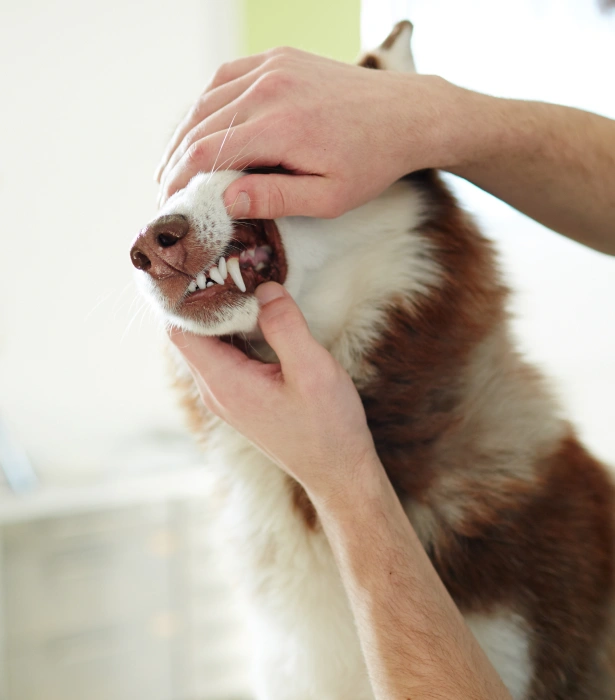
Interventional Dentistry is a term used to describe making adjustments in the mouth to prevent problems before they happen. This includes pulling puppy teeth when they don’t fall out by the time they should, placing bite planes to prevent teeth from jabbing into the gums, and pulling adult teeth if they are causing crowding issues.
Your veterinarian will consistently examine your pet’s mouth at the 8, 12, and 16 week visit to ensure the teeth and bite are developing correctly. If not, they may recommend an interventional procedure to prevent long term damage.
Although cats typically require fewer interventional dental procedures than dogs, routine dental evaluations are an important part of every veterinary visit. Early conditions such as retained kitten teeth, juvenile stomatitis, or juvenile gingivitis (gum inflammation) can be identified and treated promptly to support lifelong oral health.
Additional treatments may be recommended but are not included:
- Pre-operative Bloodwork: This is REQUIRED for the health and safety of your pet. Costs will vary based on age and health status.
- Periovive Application: A 0.8% hyaluronic acid gel used to promote healing, tissue regeneration, and reduce irritation.
- Synergy Application: A synthetic bone graft used in cases of severe bone loss.
Anesthetic dental procedures are necessary for all pets. Periodontal disease, broken teeth, and other issues can only be thoroughly examined and treated when your pet is relaxed and sedated. We do NOT recommend anesthesia-free dentistry.