New Clients Can Receive $25 off Your Pet’s First Exam!
Routine & Preventative Blood Work
Routine (preventative) blood work gives us a valuable inside look at your pet’s overall health. Many diseases can develop silently, showing no obvious symptoms until they are advanced. Regular testing helps us catch concerns early, when they are most treatable.
Our in‑house testing includes:
- Complete Blood Counts (CBCs): Evaluates red and white blood cells and platelets to detect anemia, infection, inflammation, and immune system concerns.
- Blood Chemistries: Assesses liver, kidney, pancreas, blood sugar, electrolytes, and protein levels to help identify metabolic or organ-related disease.
- Heartworm Testing: Screens for potentially life‑threatening heartworm disease, even before symptoms occur.
- Drug Maintenance Monitoring: Ensures long‑term medications are safe and effective for your pet by monitoring organ function and medication levels.
Digital Imaging (X-Ray)
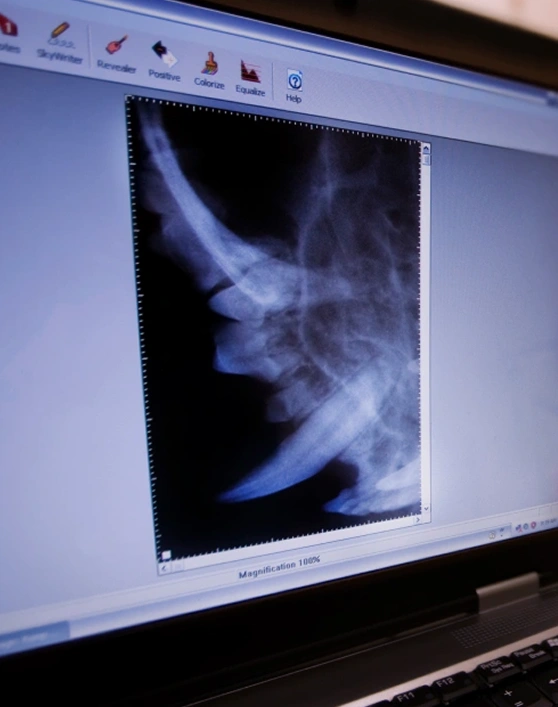
X-ray (radiographs) allow us to take an in depth look at what is going on inside your pet. It can show us broken bones, foreign objects, bloat, hernias, and so much more. Digital x-ray is an advancement over the outdated film that needs to be developed.
Besides the improved environmental impacts of not using film and the chemicals required to develop x-ray films, digital x-ray also allows us many diagnostic advantages. With digital x-ray, our doctors may enlarge images and adjust contrasts to better diagnose. Additionally, digital x-ray allows us to e-mail x-ray images to specialists for faster consultations allowing us to promptly begin treatment. Our digital dental x-ray allows more comprehensive dental care for your pet.
PennHIP Radiographs
The PennHIP method is a novel way to assess, measure, and interpret hip joint laxity. It consists of three separate radiographs to capture precise measurements for laxity and congruity. The PennHIP technique is the most accurate method the test for joint laxity and it has been shown to be a better predictor for the onset of OA. Dr. Starnes is certified to perform these radiographs that DO require sedation.
OFA Radiographs
We understand how valuable your pet is, and realize that you do not want your pet sedated if it does not need to be. Our experienced certified veterinary technicians led by our veterinarians perform most OFA hips and elbow radiographs without sedation using advanced, digital radiology. We are experienced in the transmission process, and our veterinarians can review the radiographs with you so that you are not submitting them unnecessarily.
Ultrasound
Ultrasound can show us detailed images within your pet without having to start with surgery. This non-invasive tool is used to diagnose diseases of the kidneys, liver, spleen, bladder, and more. It is also a sensitive way to evaluate pregnancy in the early stages of development.
Ultrasound is particularly useful for viewing soft tissue structures within the abdomen. While ultrasound is similar to x-ray, in that we are able to see structures within the body, the ultrasound tends to be more precise for soft tissues. Taking an x-ray can give us a general idea of what is going on within the body, but an ultrasound provides us with vital information of what is going on within an organ; “the trees within the forest”.