10702 S. Parker Rd, Parker, CO 80138

Preparing a pet for surgery can feel overwhelming, especially when you are unsure what you should do before the procedure. Fortunately, a thoughtful preparation plan can make the experience easier for both you and your pet. From following feeding instructions to creating a comfortable recovery space, small steps can make a meaningful difference.
Surgery may be recommended for many reasons, including treating an injury, removing an abnormal growth, addressing an internal condition, or improving a pet’s quality of life. Regardless of the reason, your veterinarian will provide instructions designed around your pet’s health, age, procedure, and individual needs.
If you are searching for reliable information about pet surgery, remember that preparation begins well before the day your pet enters the surgical area. Understanding what to expect, communicating openly with your veterinary team, and following preoperative instructions carefully can help support a safer experience.
Start Preparing as Soon as Surgery Is Scheduled
Once your veterinarian recommends surgery, ask questions. You do not need to wait until the morning of the procedure to discuss concerns.
Ask your veterinary team about:
- Why the procedure is necessary
- How the surgery will be performed
- Whether your pet needs pre-surgical testing
- When your pet should stop eating or drinking
- Which medications should continue
- What type of anesthesia will be used
- How long recovery may take
- What restrictions your pet will have afterward
- Which warning signs require immediate attention
Writing these questions down can help you remember them during the appointment. In addition, make sure everyone in your household understands the instructions so your pet receives consistent care.
Follow Pre-Surgical Feeding Instructions Carefully
One of the most important things you can do before surgery is follow your veterinarian’s instructions about food and water.
Your veterinarian may recommend withholding food for a specific period before anesthesia. This helps reduce certain risks associated with anesthesia. However, fasting instructions can vary depending on the animal, age, health status, procedure, and veterinary protocol.
Therefore, never assume that the same fasting schedule applies to every pet.
Puppies, kittens, diabetic pets, and animals with certain medical conditions may require different instructions. If your pet accidentally eats something before surgery, tell the veterinary team rather than hiding the information. The team can determine whether the procedure should proceed as planned.
Review Your Pet’s Medications
Medication management is another important part of surgical preparation.
Some medications may need to continue before surgery, while others may need to be temporarily adjusted. The correct approach depends on your pet’s health and the medication involved.
Give your veterinarian a complete list of everything your pet receives, including:
- Prescription medications
- Supplements
- Vitamins
- Flea and tick products
- Over-the-counter medications
- Herbal products
Most importantly, do not give your pet human medication unless your veterinarian specifically instructs you to do so. Certain human drugs can be dangerous or even life-threatening to dogs and cats.
If you are uncertain about a medication, contact your veterinary team before administering it.
Keep Your Pet’s Routine Calm
Pets can pick up on changes in their environment. While you cannot completely eliminate pre-surgery stress, you can keep the days leading up to the procedure as predictable as possible.
Maintain familiar meal times, sleeping arrangements, and bathroom routines when appropriate. Avoid unnecessary excitement or strenuous activity unless your veterinarian recommends otherwise.
For anxious pets, a calm household can make a noticeable difference. Speak normally, avoid dramatic reactions, and give your pet a comfortable place to rest.
At the same time, do not make major changes to your pet’s routine simply because surgery is approaching. Familiar surroundings can provide reassurance.
Prepare Transportation for Surgery Day
Plan your trip to the veterinary hospital before surgery day arrives.
Make sure your pet can travel safely. Dogs should generally have secure restraint during transportation, while cats should travel in an appropriate carrier. If your pet has mobility problems, ask the veterinary team whether you need additional assistance getting them into the vehicle.
Also allow enough time for check-in. Arriving in a rush can increase stress for everyone.
Bring any requested paperwork, medication information, and special instructions. If your veterinary hospital has asked you to bring a particular item, prepare it the night before.
Create a Recovery Area at Home
Your preparation should not stop when your pet leaves the veterinary hospital.
Before surgery day, choose a quiet recovery area where your pet can rest without excessive activity. Depending on the procedure, your pet may need to avoid stairs, jumping, running, or interaction with other animals.
Consider preparing:
- A clean, comfortable bed
- Fresh water
- Easily accessible food
- Prescribed medications
- A leash for controlled bathroom breaks
- An appropriately sized crate or confinement area if recommended
- Any protective device prescribed by your veterinarian
Keep the recovery area away from rough play and unnecessary household traffic.
If you have multiple pets, you may need to separate them temporarily. Another pet may accidentally lick the incision, encourage play, or cause your recovering pet to become too active.
Understand What Normal Recovery May Look Like
Pets can behave differently after anesthesia. Your veterinarian should explain what you can expect based on your pet and the procedure.
Your pet may initially appear sleepy, less energetic, or slightly different from normal. Appetite may also change temporarily. However, recovery should follow the instructions provided by your veterinary team.
Before leaving the hospital, make sure you understand:
- When your pet can eat and drink
- How and when to give medications
- How much activity is permitted
- How to protect the surgical site
- When the incision should be checked
- When follow-up care is required
- Which symptoms require immediate veterinary attention
Do not rely solely on general information found online. Your pet’s surgical plan is individualized, so your veterinarian’s instructions should take priority.
Prevent Your Pet From Licking or Chewing the Incision
Pets do not understand why a surgical incision needs protection. As a result, they may lick, scratch, or chew the affected area.
Unfortunately, excessive attention to an incision can interfere with healing and increase the risk of complications.
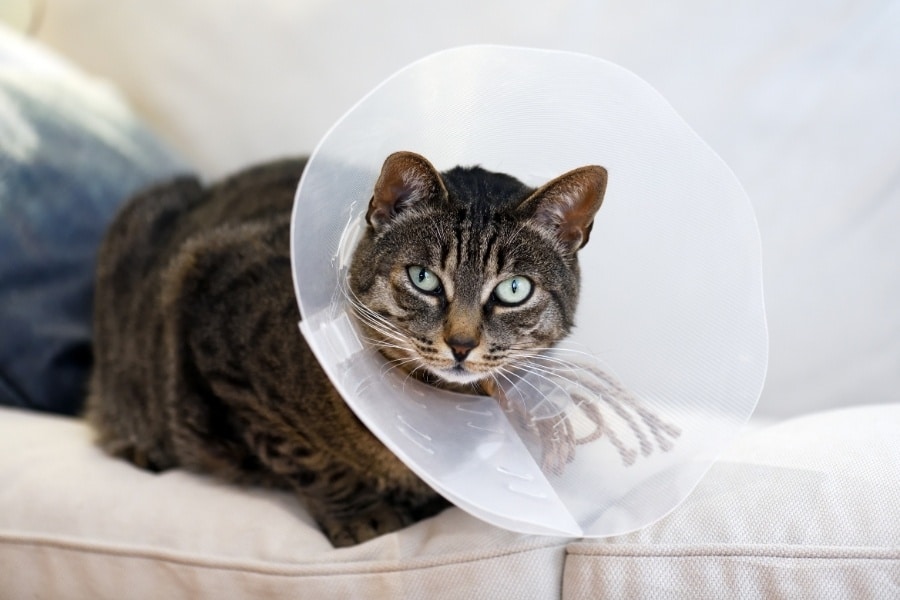
If your veterinarian recommends an Elizabethan collar or another protective device, use it according to their instructions. Even if your pet seems uncomfortable wearing it at first, removing it without veterinary guidance can allow your pet to damage the surgical site.
Check the incision as directed. If you notice significant swelling, persistent bleeding, discharge, an unpleasant odor, opening of the incision, or another concerning change, contact your veterinary team promptly.
Keep Activity Under Control
One of the biggest challenges after surgery is stopping a pet from doing too much too soon.
Your pet may appear energetic before the body has fully healed. Running, jumping, climbing stairs, or playing vigorously can place unnecessary stress on the surgical area.
Follow your veterinarian’s activity restrictions even if your pet seems completely normal.
For dogs, controlled leash walks may be appropriate for bathroom breaks depending on the procedure. Cats may need temporary confinement to prevent jumping onto furniture.
Think of recovery as a gradual return to normal—not a race to get there.
Watch for Changes After Surgery
You know your pet’s normal behavior better than anyone. That makes you an important part of postoperative monitoring.
Pay attention to changes involving:
- Appetite
- Water consumption
- Energy level
- Bathroom habits
- Breathing
- Mobility
- Comfort
- Behavior
- Surgical incision
Some temporary changes can occur after anesthesia, but significant or worsening symptoms deserve veterinary attention.
If something does not look right, contact your veterinary hospital instead of waiting and hoping the problem disappears. Early communication can help your veterinary team determine whether your pet needs additional care.
Make the Veterinary Team Part of Your Preparation
Successful surgical preparation is not something pet owners have to figure out alone.
Your veterinary team can guide you through each stage, from pre-surgical testing and anesthesia preparation to medication administration and postoperative monitoring.
Before the procedure, tell the team about anything unusual you have noticed. Even seemingly minor changes—such as reduced appetite, coughing, vomiting, diarrhea, unusual tiredness, or behavioral changes—may be relevant when evaluating whether your pet is ready for anesthesia.
Clear communication helps your veterinarian make informed decisions about your pet’s care.
What Should You Avoid Before Pet Surgery?
Knowing what not to do can be just as important as knowing what to do.
Avoid making independent changes to your pet’s medications, feeding schedule, or activity level without veterinary guidance. Do not give treats after the fasting period begins, even if your pet looks at you with those irresistible eyes.
You should also avoid allowing your pet to engage in unnecessary rough play before surgery. If your pet becomes sick or develops a new symptom before the procedure, contact the veterinary team and explain what happened.
Finally, do not be afraid to ask for clarification. If an instruction is unclear, asking once is far better than making an assumption.
How Pet Parents Can Make Surgery Day Easier
A little organization can make surgery day smoother.
The night before, review the veterinary instructions and prepare everything you need. Set reminders for medication or fasting requirements if necessary. Make sure your transportation is ready and that you know when and where to arrive.
Most importantly, remain calm.
Your pet may respond to your emotions, so maintaining a reassuring and composed attitude can help create a more comfortable experience. You do not need to pretend that you are not worried. Instead, focus on the practical steps you can control.
Preparation gives you something useful to focus on while helping your pet receive the care they need.
When Should You Contact Your Veterinarian?
Contact your veterinary team before surgery if your pet develops a new health concern or if you are uncertain about any preparation instruction.
After surgery, seek veterinary guidance if you notice concerning changes such as significant bleeding, difficulty breathing, severe weakness, uncontrolled pain, repeated vomiting, worsening swelling, discharge from the incision, or another symptom that your veterinarian specifically warned you about.
Your veterinary team would rather answer a question early than have you wait while a potentially serious problem develops.
If you are looking for experienced guidance with veterinary pet surgery parker, professional veterinary support can help you understand each stage of your pet’s surgical journey and make informed decisions about their care.
Preparing your pet for surgery involves much more than showing up at the veterinary hospital on the scheduled day. By following feeding and medication instructions, keeping your pet’s routine calm, planning safe transportation, preparing a recovery space, and monitoring your pet carefully afterward, you can support a smoother surgical experience.
Every pet is different, so always follow the specific instructions provided by your veterinarian rather than relying on a one-size-fits-all checklist.
If your pet is scheduled for a procedure and you have questions about preparation or recovery, schedule your appointment with Parker Center Animal Clinic to discuss your pet’s surgical care needs.
Frequently Asked Questions
Q1. How should I prepare my pet the night before surgery?
Ans: Follow your veterinarian’s specific instructions regarding food, water, medications, bathing, and activity. Keep your pet calm and prepare a comfortable recovery area before leaving for the hospital.
Q2. Can my pet take regular medications before surgery?
Ans: Some medications may need to continue, while others may require temporary changes. Never make this decision yourself. Ask your veterinarian which medications your pet should receive before surgery.
Q3. What should I bring to the veterinary hospital on surgery day?
Ans: Bring any requested paperwork, medication information, and other items your veterinary team recommends. You should also arrive at the instructed time so the team can complete the necessary check-in process.
Q4. How does Parker Center Animal Clinic help pets prepare for surgery?
Ans: Parker Center Animal Clinic provides veterinary guidance throughout the surgical process, helping pet parents understand preparation requirements, anesthesia considerations, postoperative care, and recovery instructions.
Q5. Can I contact Parker Center Animal Clinic if I am worried about my pet before surgery?
Ans: Yes. If your pet develops a new symptom or you are uncertain about a pre-surgical instruction, contacting Parker Center Animal Clinic can help you understand what steps to take before the procedure.
Q6. What should I do if my pet seems uncomfortable after surgery?
Ans: Follow the postoperative instructions provided by your veterinary team and monitor your pet closely. If discomfort appears severe, worsens, or occurs with other concerning symptoms, contact your veterinarian promptly.