

Dangerous Pet Equipment: Collars, Toys, and Chews That Can Hurt Your Dog or Cat
Not everything marketed for pets is safe for pets. Some of the most popular collars, leashes, toys, and chews sold in pet stores can cause real harm, from fractured teeth and choking to neck injuries and emergency surgery for swallowed objects. The challenge is that many of these products look perfectly fine on the shelf, and the risks only become obvious after something goes wrong. Knowing which items to avoid and what to use instead can prevent painful injuries, expensive emergencies, and unnecessary stress for your pet.
At Parker Center Animal Clinic, our AAHA-accredited team regularly treats injuries caused by unsafe equipment and chews, including broken teeth, soft tissue damage, and gastrointestinal foreign bodies that require surgical removal. We are happy to help you choose gear that fits your pet safely and supports positive behavior. Call us at 303-841-8833 or book an appointment online to bring your pet in for a wellness visit where we can assess fit, comfort, and safety.
Reading What Your Dog Is Telling You
Every equipment and toy choice is easier to make well when you can read how your dog is actually responding. Dog body language is a continuous stream of communication, and signals are often subtle before they become obvious.
Stress signals to watch for during walks, play, or when fitting equipment:
- Lip licking or frequent yawning unrelated to tiredness
- Pinned ears or a lowered head
- Tail tucked or held low
- Panting when the temperature does not explain it
- Freezing or resistance when equipment is approached
Any consistent stress signal in response to a piece of equipment is meaningful feedback. Gear that causes stress or pain tends to suppress behavior temporarily rather than resolve it, and suppression is not the same as learning.
Why Reward-Based Training Matters for Equipment Choices
Positive reinforcement training works by rewarding the behaviors you want to see, making those behaviors more likely to repeat. It builds trust, reduces stress, and creates durable habits because the dog is choosing the behavior willingly rather than complying to avoid discomfort.
This matters for equipment because tools that work through pain or pressure can address surface behavior while worsening the underlying problem. A dog with leash reactivity who is suppressed with aversive equipment may appear calmer on leash but becomes increasingly sensitized to triggers over time. Approaches like the engage-disengage game address reactivity at the root level without the physical and emotional costs of aversive tools.
Training Equipment to Avoid
Prong Collars and Choke Chains
Prong collars use a series of inward-facing metal prongs that tighten and pinch when a dog pulls. Choke chains constrict around the throat with the same pulling motion. Neither teaches a dog how to walk politely; they teach a dog that pulling causes pain, which suppresses the behavior without building the alternative.
The dangers of training collars include tracheal injury, esophageal damage, and injuries to the cervical spine and neck musculature. Dogs with brachycephalic anatomy, throat conditions, or existing neck issues face amplified risk.
Shock Collars and Other Aversive Tools
Aversive training methods including shock collars, citronella spray collars, and choke devices carry documented risks of physical injury (burns, skin irritation) and behavioral side effects that often make problems worse. Punishment delivered without precise timing creates associations between the pain and whatever the dog was noticing in that moment, which can generate aggression in dogs or fear responses tied to everyday stimuli rather than the intended behavior.
AAHA and major veterinary behavior organizations oppose the use of shock collars. At Parker Center, we take the same position.
Retractable Leashes
Retractable leash risks include the thin cord that can wrap around limbs, fingers, or necks causing lacerations and friction burns. Retractable leash injuries to people and pets are documented and can be severe. These leashes also reinforce pulling by allowing dogs to practice it continuously, and provide almost no meaningful control if a dog lunges toward a car or another animal.
Safer Walking Equipment
Harnesses
Harnesses distribute pressure across the chest and shoulders rather than concentrating it on the neck, making them substantially safer for most dogs and particularly important for small breeds, brachycephalic dogs, and those with any history of neck issues.
Choosing the right collar or harness depends on your dog’s size, pulling behavior, and how they walk. Front-clip harnesses redirect a dog who pulls forward toward you, which interrupts the pulling behavior effectively. Back-clip harnesses are appropriate for dogs who already walk calmly. Either option is gentler and safer than neck-pressure-based equipment.
Standard Leashes and Long Lines
A standard 4 to 6 foot leash provides the best balance of control and freedom for everyday walks. It keeps your dog close enough for communication and safety without the drawbacks of retractable design.
For recall practice in open areas, a long line (15 to 30 feet) offers the safety of a leash with more freedom. Long line training builds reliable recall skills safely. Use long lines away from roads and traffic, and practice appropriate management so the line does not create hazards for people or other dogs.
Our team is happy to advise on gear fitting and harness selection at your next wellness visit. Book an appointment or call 303-841-8833.
Dangerous Toys
Gastrointestinal foreign bodies are one of the most common surgical emergencies in dogs, and toy parts are a frequent cause. Pieces that seem small enough to ignore can become lodged in the esophagus or intestines and require surgical removal.
Common toy hazards:
- Tennis balls: abrasive felt wears tooth enamel with heavy use; balls can compress enough to lodge in the throat of larger dogs
- Rope toys: individual fibers, when swallowed, wrap around intestinal structures and create life-threatening linear foreign bodies requiring emergency surgery
- Squeaker toys: once the squeaker is extracted (within minutes for some pets), the small plastic piece becomes a choking and swallowing risk
- Undersized toys: any toy that fits past the back teeth or could be swallowed whole is too small for that dog
- Hard plastic toys: can shatter into sharp fragments that lacerate the mouth and GI tract
Always supervise play sessions, inspect toys regularly for wear or damage, and discard any toy that is torn, missing pieces, or approaching a size that could be swallowed.
Dangerous Chews
Dangerous dog chews are routinely sold as “natural” or “long-lasting” despite causing significant veterinary injuries. Dangerous chew items include:
- Bones (cooked or raw): cooked bones are brittle and splinter into sharp fragments; raw bones fracture teeth and carry bacterial contamination risk
- Antlers and hooves: extremely hard surfaces are among the most common causes of slab fractures of the upper premolars (carnassial teeth)
- Rawhide: pieces swallowed before fully softened cause choking and blockages; the softened mass can accumulate and form intestinal obstructions
- Hard nylon bones: some dogs chew aggressively enough to fracture teeth on these; they can also be gnawed into points with sharp edges
The thumbnail test: Press your thumbnail firmly into the chew. If it does not leave a dent, the product is too hard and carries fracture risk. If it does dent, the material has enough give to be safer.
Dental fractures from hard chews are painful, become infected easily, and usually require extraction. Our dental care services can treat dental fractures due to hard toys, but we’d rather prevent them. Prevention through chew selection is substantially cheaper and less stressful than treatment.
Safer Toy and Chew Alternatives
Safe chew toys flex and compress under jaw pressure. Durable rubber toys like KONG-style products withstand significant chewing while remaining soft enough not to fracture teeth, and can be stuffed with food for extended engagement.
Edible dental chews that soften while being chewed, VOHC-accepted products, and appropriately sized bully sticks with supervision all provide safe chewing outlets. Match the chew to your dog’s size and chewing style, and always supervise until you understand how your specific dog approaches each product.
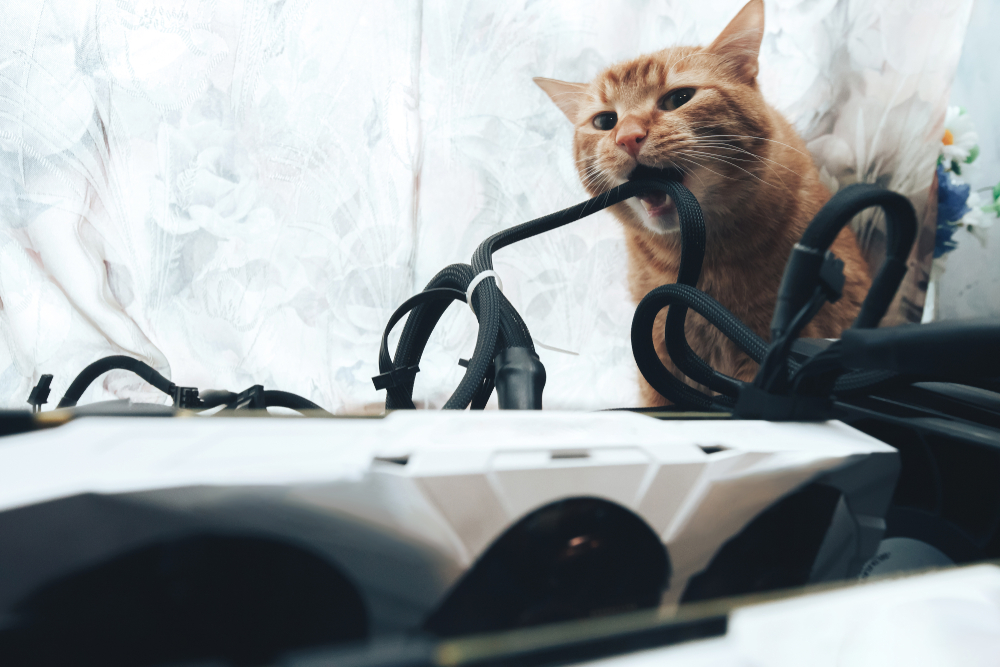
Cats face similar risks with string, ribbon, hair ties, and small toy parts that can cause linear foreign bodies requiring surgical intervention.
When Behavior Is the Real Issue
Equipment choices alone do not fix underlying behavior problems. A dog who pulls compulsively, reacts to other dogs, or destroys toys in seconds may have anxiety, a history of trauma, or simply insufficient physical and mental exercise that a different leash cannot resolve.
Our team can discuss behavior-related concerns during wellness visits and help distinguish between equipment issues, training needs, and medical contributions to problem behavior. For puppies specifically, starting with appropriate equipment early prevents the reinforcement of pulling and reactive habits that become much harder to address later.
Frequently Asked Questions
How do I know if a toy is the right size?
If the toy can fit past the back teeth or be maneuvered toward the throat, it is too small for that dog. When in doubt, go larger.
Are “natural” chews always safer?
Not necessarily. Antlers, hooves, and bones are natural but regularly cause slab fractures and blockages. Use the thumbnail test and supervise regardless of the product’s origin.
Do prong collars really cause harm?
Yes. Beyond the physical risks to the throat and spine, aversive tools suppress behavior through pain without teaching alternatives, and can intensify fear and reactivity over time. Front-clip harnesses with positive reinforcement training are both more effective and substantially safer.
What are the warning signs after a chew or toy incident?
Gagging, pawing at the mouth, excessive drooling, vomiting, food refusal, or abdominal pain following play with a chew or toy warrant immediate evaluation. Call 303-841-8833 or contact us to reach our team.
Do cats face toy safety risks too?
Yes. String, ribbon, yarn, and linear materials are particularly dangerous for cats, as swallowed string wraps around internal structures and requires surgical removal. Small parts from any toy are also a swallowing risk.
Making Safer Choices Together
The right equipment, toys, and chews are available in abundance. The wrong ones, unfortunately, are too. Parker Center Animal Clinic is here to help you navigate those choices with specific guidance for your individual pet’s size, breed, chewing habits, and behavior.
Call us at 303-841-8833 or book an appointment online to discuss gear, dental health, or any concerns about what your pet has been chewing. Contact us between visits with questions any time.